The "12 Days" of Risk: 7 Cyber Threats to Watch This December
OVERVIEW
December brings not only holiday cheer but also heightened cyber risks, with scams and threats like AI
Artificial Intelligence (AI) refers to the simulation of human intelligence processes by machines, particularly computer systems. In the IT and digital marketing industry, AI is transforming the way businesses operate by enabling machines to analyze data, learn patterns, and make decisions with minimal human intervention. AI is widely used in chatbots, personalized marketing campaigns, predictive analytics, and customer behavior analysis. It helps optimize ad performance, improve user experiences, and target the right audience with precise data-driven insights. From automating repetitive tasks to delivering actionable marketing strategies, AI has become a critical tool for innovation and efficiency in the digital landscape.
-driven phishing, fake delivery notifications, and compromised gift cards on the rise. From avoiding public USB
Universal Serial Bus (USB) is a standardized technology designed to facilitate the transfer of data and power between electronic devices. From charging phones to connecting keyboards, USB connectors are integral to modern computing and device interaction. For an in-depth look, see our dedicated USB article that explores its various types and functions.
chargers to enabling Multi-Factor Authentication
Multi-Factor Authentication (MFA) is a security enhancement that requires users to verify their identity using multiple credentials before gaining access to a system, application, or service. This layered approach to security helps ensure that the person requesting access is indeed who they claim to be, significantly reducing the risk of unauthorized access.
MFA generally involves a combination of two or more of the following factors:
Something you know: A password, PIN, or answer to a security question.
Something you have: A physical token, smart card, or a mobile phone to receive a verification code.
Something you are: Biometric identifiers, such as a fingerprint, facial recognition, or voice, that uniquely identify the user.
By requiring multiple forms of verification, MFA adds an additional layer of defense against potential threats, even if one factor (such as a password) becomes compromised. For instance, even if an attacker obtains a user's password, they would still need the second form of authentication to gain access.
In today's digital landscape, where cyber threats are increasingly sophisticated, implementing MFA is a critical step for organizations to protect sensitive data and systems. It enhances security for end-users and across the enterprise, making it a fundamental component of a robust cybersecurity strategy.
, staying vigilant and proactive is key to protecting personal and corporate data. This article outlines the top 7 cyber threats of the season and offers practical tips to safeguard your identity and finances.
INDEPTH
December is here, and while it's a time for celebration, it's also prime season for cybercriminals. With digital transactions skyrocketing, AI
Artificial Intelligence (AI) refers to the simulation of human intelligence processes by machines, particularly computer systems. In the IT and digital marketing industry, AI is transforming the way businesses operate by enabling machines to analyze data, learn patterns, and make decisions with minimal human intervention. AI is widely used in chatbots, personalized marketing campaigns, predictive analytics, and customer behavior analysis. It helps optimize ad performance, improve user experiences, and target the right audience with precise data-driven insights. From automating repetitive tasks to delivering actionable marketing strategies, AI has become a critical tool for innovation and efficiency in the digital landscape.
-driven scams and other threats are more active than ever. Protecting your credit card is just the beginning—personal browsing on work devices can also put your company’s network at risk.
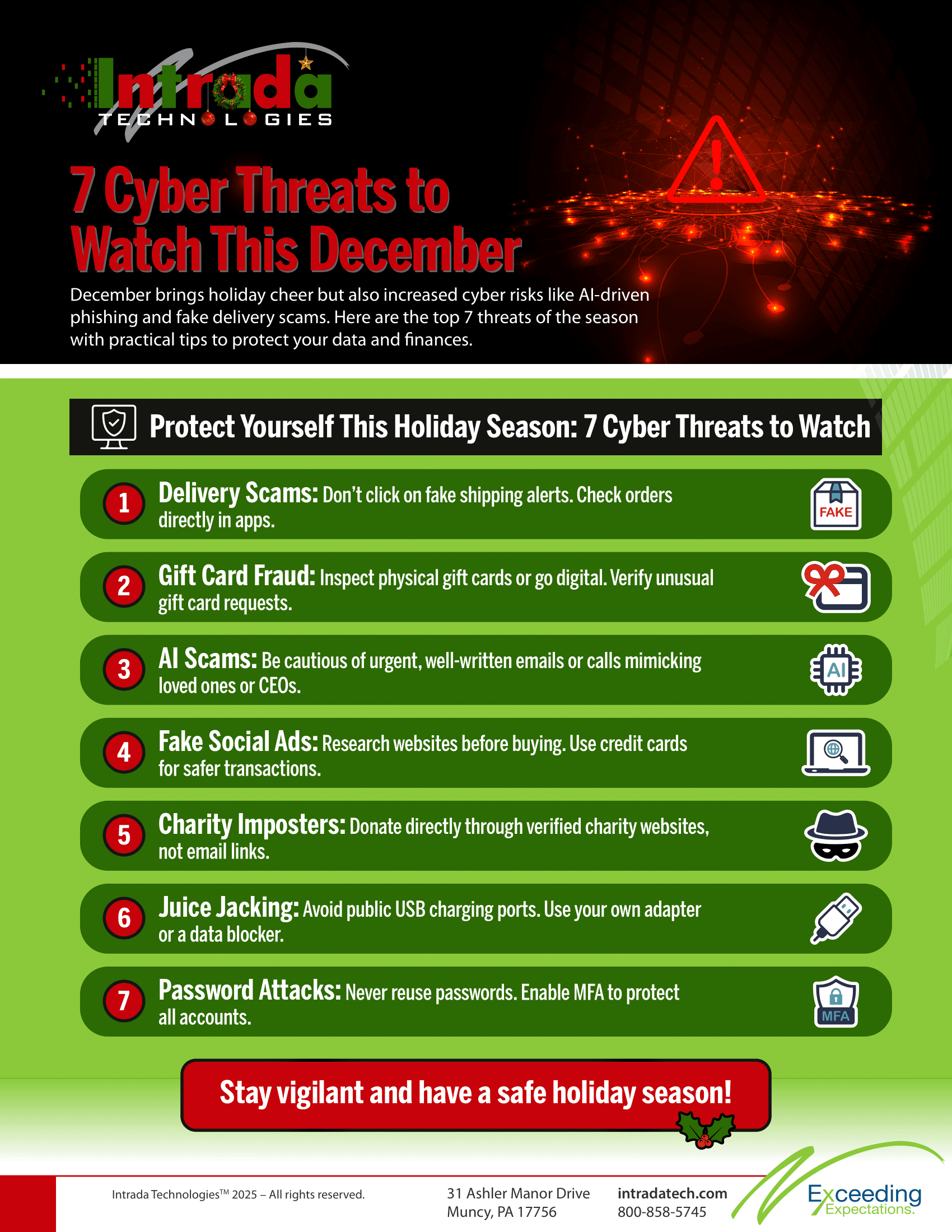
To help you navigate this busy season securely, here are the Top 7 Cyber Threats to watch for, along with simple steps to stay protected:
1. The "Delivery Exception" Trap (Smishing)
The Threat: Fake delivery notifications trick you into clicking malicious links.
How to Protect: Don’t click on links in texts or emails. Check your orders directly through official apps or websites.
2. The Gift Card "Drain"
The Threat: Scammers tamper with gift cards in stores or send fake requests pretending to be your boss.
How to Protect: Inspect physical cards before buying or go digital. Always verify gift card requests.
3. The AI
Artificial Intelligence (AI) refers to the simulation of human intelligence processes by machines, particularly computer systems. In the IT and digital marketing industry, AI is transforming the way businesses operate by enabling machines to analyze data, learn patterns, and make decisions with minimal human intervention. AI is widely used in chatbots, personalized marketing campaigns, predictive analytics, and customer behavior analysis. It helps optimize ad performance, improve user experiences, and target the right audience with precise data-driven insights. From automating repetitive tasks to delivering actionable marketing strategies, AI has become a critical tool for innovation and efficiency in the digital landscape.
-Powered Scam Wave
The Threat:AI
Artificial Intelligence (AI) refers to the simulation of human intelligence processes by machines, particularly computer systems. In the IT and digital marketing industry, AI is transforming the way businesses operate by enabling machines to analyze data, learn patterns, and make decisions with minimal human intervention. AI is widely used in chatbots, personalized marketing campaigns, predictive analytics, and customer behavior analysis. It helps optimize ad performance, improve user experiences, and target the right audience with precise data-driven insights. From automating repetitive tasks to delivering actionable marketing strategies, AI has become a critical tool for innovation and efficiency in the digital landscape.
-generated phishing emails and deepfake calls mimic relatives or CEOs.
How to Protect: Use a family "safe word" for emergencies and stay skeptical of urgent requests.
4. Social Media "Steal" vs. Deal
The Threat: Fake ads on social media sell discounted items to steal your payment info.
How to Protect: Research websites before purchasing and stick to credit cards for fraud protection.
5. Charity Imposters
The Threat: Cybercriminals create fake charity websites to steal donations.
How to Protect: Donate directly through verified charity websites, not links.
6. The "Juice Jacking" Travel Risk
The Threat: Public USB
Universal Serial Bus (USB) is a standardized technology designed to facilitate the transfer of data and power between electronic devices. From charging phones to connecting keyboards, USB connectors are integral to modern computing and device interaction. For an in-depth look, see our dedicated USB article that explores its various types and functions.
charging ports can install malware or steal data.
How to Protect: Use your own charging adapter or a USB
Universal Serial Bus (USB) is a standardized technology designed to facilitate the transfer of data and power between electronic devices. From charging phones to connecting keyboards, USB connectors are integral to modern computing and device interaction. For an in-depth look, see our dedicated USB article that explores its various types and functions.
data blocker.
7. Credential Stuffing (Corporate Account Creep)
The Threat: Stolen passwords from shopping sites are used to access work accounts.
How to Protect: Don’t reuse passwords, and enable Multi-Factor Authentication
Multi-Factor Authentication (MFA) is a security enhancement that requires users to verify their identity using multiple credentials before gaining access to a system, application, or service. This layered approach to security helps ensure that the person requesting access is indeed who they claim to be, significantly reducing the risk of unauthorized access.
MFA generally involves a combination of two or more of the following factors:
Something you know: A password, PIN, or answer to a security question.
Something you have: A physical token, smart card, or a mobile phone to receive a verification code.
Something you are: Biometric identifiers, such as a fingerprint, facial recognition, or voice, that uniquely identify the user.
By requiring multiple forms of verification, MFA adds an additional layer of defense against potential threats, even if one factor (such as a password) becomes compromised. For instance, even if an attacker obtains a user's password, they would still need the second form of authentication to gain access.
In today's digital landscape, where cyber threats are increasingly sophisticated, implementing MFA is a critical step for organizations to protect sensitive data and systems. It enhances security for end-users and across the enterprise, making it a fundamental component of a robust cybersecurity strategy.
(MFA
Multi-Factor Authentication (MFA) is a security enhancement that requires users to verify their identity using multiple credentials before gaining access to a system, application, or service. This layered approach to security helps ensure that the person requesting access is indeed who they claim to be, significantly reducing the risk of unauthorized access.
MFA generally involves a combination of two or more of the following factors:
Something you know: A password, PIN, or answer to a security question.
Something you have: A physical token, smart card, or a mobile phone to receive a verification code.
Something you are: Biometric identifiers, such as a fingerprint, facial recognition, or voice, that uniquely identify the user.
By requiring multiple forms of verification, MFA adds an additional layer of defense against potential threats, even if one factor (such as a password) becomes compromised. For instance, even if an attacker obtains a user's password, they would still need the second form of authentication to gain access.
In today's digital landscape, where cyber threats are increasingly sophisticated, implementing MFA is a critical step for organizations to protect sensitive data and systems. It enhances security for end-users and across the enterprise, making it a fundamental component of a robust cybersecurity strategy.
) on all accounts.
Action Item for December
Before you start shopping, visit Have I Been Pwned to check if your credentials have been breached. Update weak or reused passwords immediately and use unique ones for every account.
Stay safe, stay vigilant, and enjoy the holidays securely!
David Steele is the co-founder of Intrada Technologies, a full-service web development and network management company launched in 2000. David is responsible for developing and managing client and vendor relationships with a focus on delivering quality service. In addition, he provides project management oversight on all security, compliancy, strategy, development and network services.
As 2025 draws to a close, we find ourselves reflecting on an intense year of change in technology. What began at a slower pace quickly gave way to rapid innovation, especially in AI, automation, and cybersecurity. The investments we see in these areas signal lasting transformation, not just passing ...
Discover how a purpose-built website can address the unique challenges of your industry. From small businesses driving growth to healthcare providers balancing user experience and compliance, and manufacturers streamlining operations, this article explores tailored strategies for creating impactful ...