

Over the past several years, cloud adoption has become a major focus for businesses of all sizes. The benefits are clear: improved accessibility, reduced reliance on physical hardware, and the ability to scale as needs change.But despite these advantages, one question continues to come up:“Do we nee...
Grace Hopper: The Woman Who Taught Computers to Speak
Information Technologies | Intrada Technologies | Thursday, July 9, 2026
Overview
Who was Grace Hopper, and why should more people know her name? She was a pioneering Navy Rear Admiral and computer scientist whose work on the first compiler and COBOL helped make modern computing more accessible, practical, and human-centered.
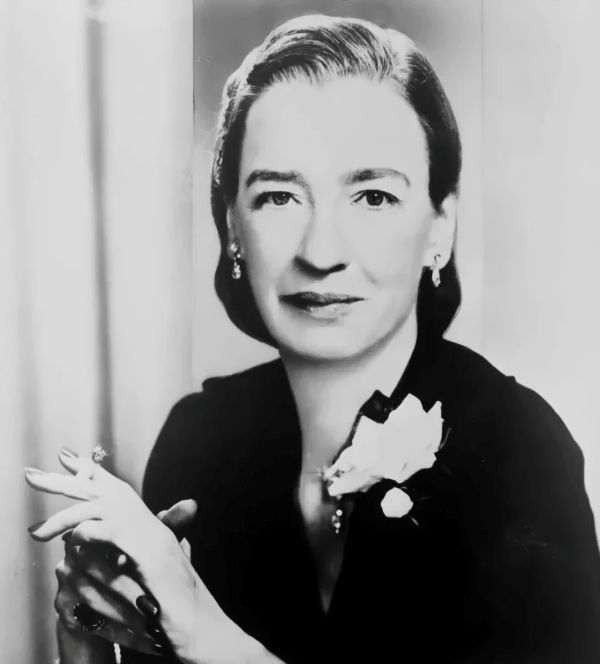
Who is Grace Hopper? Ever hear of her? Well, you should have. This U.S. Navy Rear Admiral and trailblazing computer scientist built the first compiler, helped create COBOL, and quietly shaped the way we use technology today—even if her name never made it past the IT world. Her work made software development accessible to a broader audience and laid the groundwork for modern computing.
Before Silicon Valley, before personal computers, before the internet—there was Grace Hopper. Few figures in the history of technology have left a more lasting impression, yet her name remains unfamiliar to many outside the IT world.
Here's a look at who she was, what she accomplished, and why her legacy still matters today.
Who Was Grace Hopper?
Grace Brewster Murray Hopper was born on December 9, 1906, in New York City. She earned a Ph.D. in mathematics from Yale University in 1934—a rare achievement for a woman at the time—and went on to become a professor at Vassar College.
When the United States entered World War II, Hopper joined the U.S. Naval Reserve, eventually reaching the rank of Rear Admiral. It was during her Navy service that she first encountered the Mark I computer at Harvard University, beginning a career that would reshape the technology world entirely.
What Did Grace Hopper Contribute to Computing?
Hopper's most transformative contribution was the development of the first compiler—a program that translates human-readable code into machine language. Before this, programming required writing in complex binary sequences. Hopper believed computers could understand instructions written in plain English, and she proved it.
Her compiler work directly informed the development of COBOL (Common Business-Oriented Language), which she helped create in 1959. According to the U.S. Department of Defense, COBOL remains one of the most widely used programming languages in the world, still running an estimated $3 trillion in daily commerce transactions (Reuters, 2012).
She also popularized the term "debugging" after her team famously removed a moth from a relay in the Harvard Mark II computer in 1947—a literal bug causing a system error. The incident became computing folklore, and the logbook entry is preserved at the Smithsonian Institution.
Why Does Grace Hopper's Work Still Matter?
Hopper's core belief was simple: technology should be accessible. She pushed back against the assumption that only specialists could write software. By creating tools that translated human language into machine instructions, Hopper democratized programming.
That philosophy didn't just shape how software was written—it shaped how technology teams think about usability, communication, and problem-solving. Her work set the precedent that technology exists to serve people, not the other way around.
As Hopper herself said: "The most dangerous phrase in the language is, 'We've always done it this way.'"

How Grace Hopper's Legacy Connects to What Intrada Does
At Intrada, we've operated on a similar philosophy for over 24 years. Technology is not the solution—it's the tool used to reach the solution. Like Hopper, we believe that the most effective technology strategies are built on clear communication, practical problem-solving, and a genuine understanding of the people being served.
Hopper spent her career bridging the gap between complex systems and the humans who needed to use them. Intrada works to do the same for our clients—serving as the creation or expansion of your IT or marketing teams, working directly with you to build a real partnership.
Great customer service doesn't appear on its own. It must be purposefully designed into every practice, every policy, and every interaction. That's something Grace Hopper understood about computing, and something we work to reflect every single day.
Frequently Asked Questions
What is Grace Hopper best known for?
Grace Hopper is best known for developing the first compiler and contributing to the creation of COBOL, one of the most widely used programming languages in history.
What degree did Grace Hopper have?
Hopper earned a Ph.D. in mathematics from Yale University in 1934.
Did Grace Hopper serve in the military?
Yes. Hopper served in the U.S. Naval Reserve and retired with the rank of Rear Admiral.
Why is Grace Hopper important to modern IT?
Hopper's compiler made programming accessible beyond a small group of specialists, which helped expand the technology industry. Her work underpins much of the business software still used today.
References:
Biography of Grace Murray Hopper | Office of the President
Grace Hopper | Biography, Accomplishments, & Facts | Britannica
At its core, compliance is about demonstrating that reasonable safeguards are in place to protect information and manage risk.While requirements vary by industry, most frameworks focus on similar objectives:Protecting sensitive dataControlling access to informationMaintaining records appropriatelyMo...